Custom OTT Platform Development: Complete Business Guide
The OTT industry continues to transform how audiences consume video content across smartphones, smart TVs, tablets, desktops, and gaming consoles. Building a custom OTT platform gives businesses complete control over content delivery, branding, monetization, user experience, AI-powered recommendations, streaming quality, security, and scalability. This comprehensive guide covers everything you need to know about developing a modern OTT platform in 2026, including architecture, technology stack, CDN, DRM protection, monetization models, AI integration, development cost, timeline, and best practices for launching a successful streaming business.
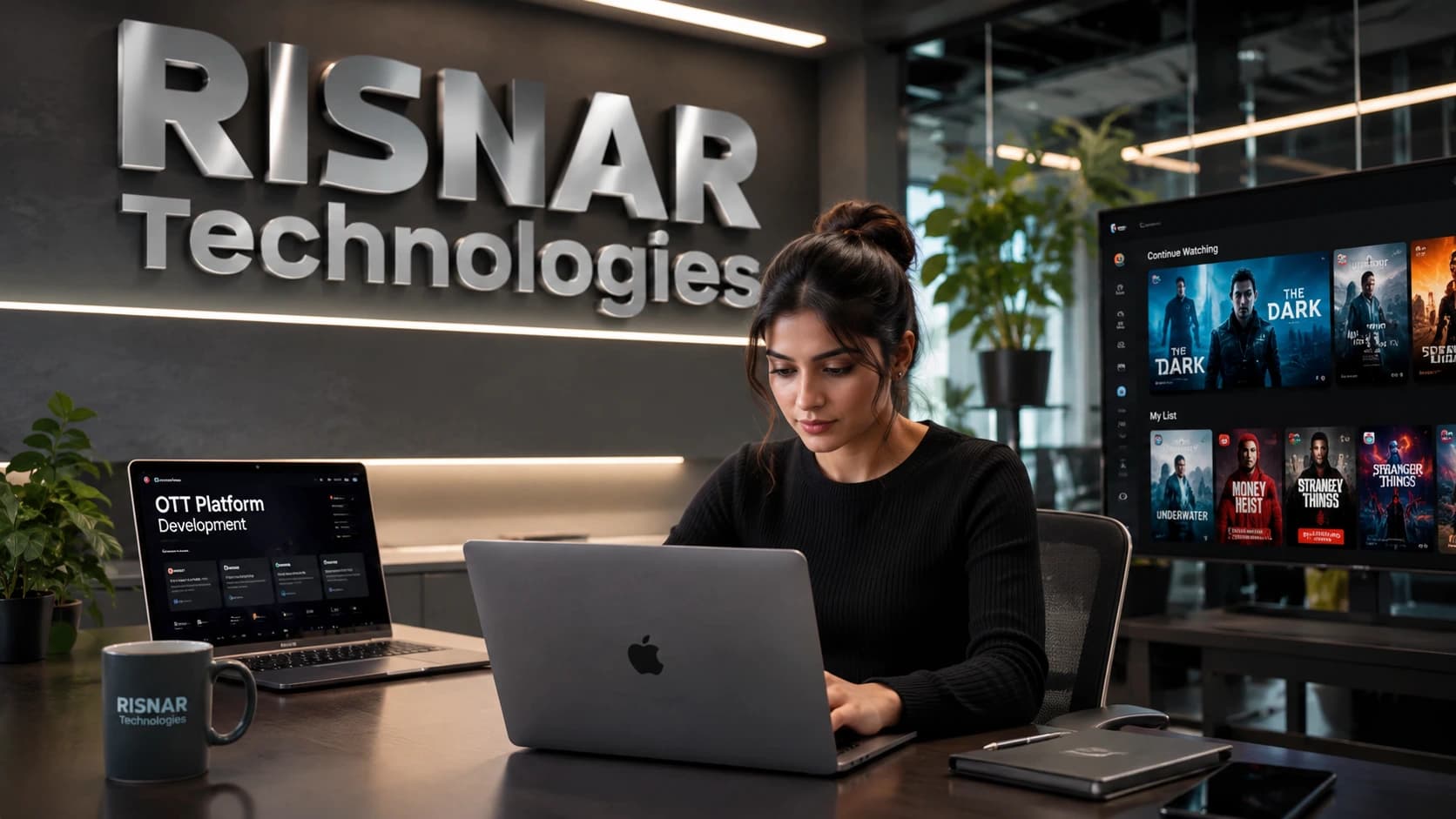
Over-the-Top (OTT) streaming platforms have fundamentally transformed the entertainment industry by allowing users to watch movies, TV shows, live sports, educational content, and exclusive originals anytime and anywhere. Instead of relying on traditional cable or satellite television, consumers increasingly prefer internet-based streaming services that offer personalized experiences across smartphones, smart TVs, tablets, laptops, gaming consoles, and web browsers. As global demand for digital video content continues to accelerate, businesses are investing in custom OTT platform development to establish direct relationships with their audiences, generate recurring revenue, and build long-term digital assets.
Unlike white-label or ready-made streaming solutions, a custom OTT platform is designed specifically around your business model, branding, content strategy, monetization goals, and user experience. Businesses gain complete control over application design, video delivery infrastructure, recommendation engines, subscription management, analytics, AI-powered personalization, content protection, advertising, payment systems, and future feature expansion. This flexibility enables streaming businesses to differentiate themselves in an increasingly competitive digital marketplace.
Modern OTT platforms are far more than simple video streaming applications. They incorporate sophisticated technologies including cloud-native architecture, Content Delivery Networks (CDNs), adaptive bitrate streaming, Digital Rights Management (DRM), AI-based content recommendations, multilingual support, user profile management, advanced search, watchlists, offline downloads, live streaming, analytics dashboards, and seamless cross-device synchronization. Together, these capabilities create engaging viewing experiences while maximizing customer retention and revenue generation.
Selecting the right technology stack, designing scalable infrastructure, implementing enterprise-grade security, optimizing streaming performance, and choosing an effective monetization model are critical decisions during OTT platform development. Businesses must also consider content licensing, global distribution, regulatory compliance, cloud infrastructure, performance optimization, AI automation, and long-term maintenance to ensure sustainable growth and operational success.
This comprehensive guide explores every major aspect of custom OTT platform development in 2026—including platform architecture, technology stack, streaming infrastructure, CDN integration, DRM protection, AI-powered personalization, monetization strategies, development cost, project timeline, security best practices, and business growth strategies. Whether you're launching a subscription video service, an educational streaming platform, a corporate video portal, or a live sports streaming business, this guide will help you understand how to build a secure, scalable, and future-ready OTT platform.
Table of Contents
Complete Guide to Custom OTT Platform Development
Building a successful OTT platform involves much more than streaming videos online. A modern OTT ecosystem combines scalable cloud infrastructure, high-performance video delivery, AI-powered content recommendations, subscription management, payment processing, enterprise security, analytics, and seamless user experiences across multiple devices. Every component must work together to deliver reliable, secure, and engaging streaming experiences while supporting long-term business growth.
The following sections explore every major aspect of OTT platform development—from business planning and architecture to streaming technologies, AI personalization, DRM protection, monetization, development costs, scalability, and best practices. Whether you're launching a Netflix-style streaming service, an educational video platform, a sports streaming application, or a corporate video portal, this guide provides a comprehensive roadmap for building a future-ready OTT business in 2026.
1. What is a Custom OTT Platform?
A Custom OTT (Over-the-Top) Platform is a video streaming solution that enables businesses to distribute digital content directly to viewers over the internet without relying on traditional cable, satellite, or broadcast television providers. Unlike white-label or ready-made streaming platforms, a custom OTT platform is designed and developed specifically around a company's business model, branding, audience requirements, content strategy, and monetization goals. This provides complete control over every aspect of the platform, including design, functionality, security, infrastructure, user experience, and future expansion.
Modern OTT platforms support on-demand video streaming, live streaming, catch-up television, podcasts, audio streaming, online education, webinars, sports broadcasting, enterprise training, and virtual events. They are accessible across smartphones, tablets, smart TVs, desktops, gaming consoles, and web browsers, allowing users to enjoy a seamless viewing experience regardless of device or location.
Custom development allows businesses to implement advanced capabilities such as AI-powered content recommendations, adaptive bitrate streaming, multilingual interfaces, personalized user profiles, subscription management, payment gateway integration, offline downloads, watchlists, parental controls, live chat, analytics dashboards, advertising management, DRM protection, and cloud-native scalability. Since every feature is built around business objectives, organizations can continuously evolve the platform without being constrained by vendor limitations or licensing restrictions.
Whether launching a Netflix-style subscription platform, an educational video portal, a corporate knowledge-sharing platform, a live sports streaming service, or a niche entertainment brand, custom OTT development enables businesses to create highly differentiated streaming experiences that maximize audience engagement, customer retention, and long-term revenue generation.
Key Characteristics of a Custom OTT Platform
- Complete ownership of source code and platform.
- Fully customized UI/UX and branding.
- Video-on-Demand (VOD) and Live Streaming support.
- Cross-platform compatibility.
- AI-powered content recommendations.
- Subscription and payment management.
- Enterprise-grade DRM and content security.
- Cloud-native scalable infrastructure.
- Advanced analytics and audience insights.
- Unlimited feature expansion for future growth.
2. Types of OTT Platforms
OTT platforms are developed for different industries, audiences, and business objectives. While all OTT platforms deliver content over the internet, they differ significantly in monetization models, streaming capabilities, target users, content types, and technical requirements. Understanding these categories helps businesses select the most suitable architecture, technology stack, and revenue strategy before beginning development.
Entertainment streaming platforms focus on delivering movies, television series, documentaries, music videos, and exclusive original content to large consumer audiences. Educational OTT platforms provide online courses, recorded lectures, certification programs, webinars, and interactive learning experiences. Enterprise streaming solutions enable organizations to distribute internal communications, employee training, product launches, and virtual events securely across global teams.
Live streaming platforms support sports events, concerts, gaming, conferences, religious broadcasts, and real-time interactive experiences with minimal latency. Meanwhile, niche OTT services target specific audiences such as fitness enthusiasts, healthcare professionals, children, regional language viewers, or industry experts by delivering specialized content and personalized viewing experiences.
Many modern OTT businesses combine multiple platform types into a single ecosystem, offering on-demand content, live streaming, downloadable media, subscription services, advertising-supported content, and AI-driven personalization. This hybrid approach maximizes audience engagement while diversifying revenue streams and improving long-term business sustainability.
Common Types of OTT Platforms
- Subscription Video-on-Demand (SVOD) Platforms.
- Advertising-Based Video-on-Demand (AVOD) Platforms.
- Transactional Video-on-Demand (TVOD) Platforms.
- Live Sports Streaming Platforms.
- Entertainment & Movie Streaming Platforms.
- Educational & eLearning OTT Platforms.
- Corporate Training & Enterprise Video Platforms.
- Religious & Community Streaming Platforms.
- Fitness, Wellness & Healthcare OTT Platforms.
- Hybrid OTT Platforms combining multiple monetization models.
3. Key Features of a Modern OTT Platform
The success of an OTT platform depends largely on the features it offers to both viewers and administrators. Today's audiences expect more than simple video playback—they demand personalized content, seamless streaming, intuitive navigation, multi-device synchronization, secure payments, and high-quality viewing experiences. A modern OTT platform must therefore combine advanced streaming technologies with intelligent business tools that improve engagement, retention, and monetization.
From the user's perspective, features such as personalized recommendations, advanced search, watchlists, continue watching, offline downloads, multilingual subtitles, adaptive bitrate streaming, parental controls, multiple user profiles, and smart TV compatibility significantly enhance the viewing experience. Meanwhile, administrators require powerful dashboards for content management, subscription handling, advertising, analytics, promotions, user management, and revenue reporting.
Artificial Intelligence has become a defining component of modern OTT platforms. AI helps automate content categorization, generate personalized recommendations, analyze viewer behavior, predict customer churn, optimize marketing campaigns, and improve content discovery. These capabilities enable streaming businesses to increase engagement while reducing operational effort.
Enterprise-grade OTT platforms also integrate secure payment gateways, Digital Rights Management (DRM), cloud storage, CDN delivery, live streaming capabilities, API integrations, customer support tools, and business intelligence dashboards to ensure the platform remains scalable, secure, and future-ready as audience demand grows.
Essential Features of a Modern OTT Platform
- Video-on-Demand (VOD) streaming.
- Live streaming support.
- Adaptive bitrate streaming.
- AI-powered content recommendations.
- Advanced search and smart filters.
- Watchlists and Continue Watching.
- Offline video downloads.
- Multiple user profiles.
- Parental controls.
- Subscription management.
- Secure payment gateway integration.
- Advertising management (AVOD).
- Smart TV, Mobile & Web compatibility.
- Multilingual audio and subtitles.
- Content Management System (CMS).
- Analytics and reporting dashboards.
- Push notifications and email automation.
- Social sharing features.
- DRM and piracy protection.
- Cloud-based scalability.
4. OTT Platform Architecture
A robust OTT platform architecture forms the foundation of a reliable, scalable, and high-performance streaming service. Modern OTT systems consist of multiple interconnected components that work together to ingest, process, secure, deliver, and analyze video content while providing seamless viewing experiences across millions of users and devices.
At the core of the architecture is the content ingestion pipeline, where videos are uploaded, transcoded into multiple resolutions, encoded into streaming formats such as HLS or MPEG-DASH, protected using DRM technologies, and stored securely in cloud storage. Content Delivery Networks (CDNs) then distribute media efficiently to viewers around the world with minimal buffering and latency.
The backend infrastructure manages authentication, user profiles, subscriptions, payment processing, content catalogs, recommendations, notifications, analytics, advertising, and API integrations. Microservices architecture has become the preferred approach because it enables independent scaling, easier maintenance, faster deployments, and higher system resilience.
On the frontend, dedicated applications for Android, iOS, Smart TVs, web browsers, tablets, and connected devices communicate with backend services through secure APIs. Combined with cloud-native infrastructure, load balancing, caching, monitoring, and automated scaling, this architecture ensures consistent performance even during major live events or peak traffic periods.
Core Components of an OTT Platform Architecture
- Content ingestion pipeline.
- Video transcoding and encoding.
- Cloud object storage.
- Content Delivery Network (CDN).
- Adaptive bitrate streaming.
- Digital Rights Management (DRM).
- User authentication & authorization.
- Subscription and billing services.
- Content Management System (CMS).
- Recommendation engine.
- Analytics and reporting.
- Microservices backend.
- REST & GraphQL APIs.
- Mobile, Web & Smart TV applications.
- Monitoring, logging & auto-scaling.
- Cloud infrastructure and load balancing.
- Notification and messaging services.
- Security, encryption & access control.
- Database and caching layer.
- CI/CD deployment pipeline.
5. Technology Stack
Choosing the right technology stack is one of the most important decisions when developing a custom OTT platform. The technology stack directly impacts platform performance, scalability, security, development speed, maintenance, and the overall viewing experience. Modern OTT platforms must efficiently support millions of users, high-definition video streaming, real-time analytics, AI-powered personalization, and seamless content delivery across multiple devices while maintaining low latency and high availability.
A complete OTT technology stack typically includes frontend applications for web, Android, iOS, Smart TVs, and streaming devices, along with a scalable backend powered by cloud-native microservices. Backend services manage authentication, content catalogs, subscriptions, payments, analytics, notifications, recommendation engines, user profiles, and API integrations. Cloud infrastructure combined with containerization and automated deployment enables rapid scaling as audience demand increases.
The streaming infrastructure incorporates video transcoding, adaptive bitrate streaming, cloud storage, Content Delivery Networks (CDNs), Digital Rights Management (DRM), media processing pipelines, monitoring systems, caching layers, and real-time analytics. Artificial Intelligence is increasingly integrated throughout the platform to personalize content, automate recommendations, optimize streaming quality, detect anomalies, and improve customer engagement.
Selecting proven, scalable technologies helps reduce maintenance costs while ensuring long-term flexibility for adding new features, expanding globally, supporting additional devices, and integrating emerging technologies. Businesses should prioritize reliability, performance, security, developer productivity, and future scalability when selecting their OTT technology stack.
Recommended OTT Technology Stack
- Frontend: React, Next.js, Flutter, React Native.
- Backend: Node.js, NestJS, Java Spring Boot, .NET.
- Mobile Apps: Flutter, Native Android, Native iOS.
- Smart TV Apps: Android TV, Apple TV, Fire TV, Roku.
- Database: PostgreSQL, MySQL, MongoDB, Redis.
- Cloud Platforms: AWS, Google Cloud, Microsoft Azure.
- Object Storage: Amazon S3 or equivalent cloud storage.
- Containerization: Docker & Kubernetes.
- Authentication: OAuth 2.0, JWT, SSO.
- API Layer: REST APIs and GraphQL.
- AI Services: Recommendation engines and personalization.
- Monitoring: Prometheus, Grafana, ELK Stack.
- CI/CD: GitHub Actions, GitLab CI, Jenkins.
- Security: SSL, DRM, Encryption, WAF.
- Analytics: Google Analytics, Mixpanel, custom dashboards.
6. Video Streaming & Content Delivery Network (CDN)
High-quality video streaming is the core of every successful OTT platform. Users expect instant playback, minimal buffering, crystal-clear video quality, fast startup times, and uninterrupted viewing regardless of their internet connection or geographic location. Delivering this experience requires a combination of efficient video encoding, adaptive streaming technologies, global Content Delivery Networks (CDNs), intelligent caching, and scalable cloud infrastructure.
Modern OTT platforms use adaptive bitrate streaming technologies such as HLS (HTTP Live Streaming) and MPEG-DASH to automatically adjust video quality according to a viewer's network conditions. This ensures smooth playback on both high-speed broadband and mobile data connections without frequent buffering or playback interruptions.
Content Delivery Networks replicate video files across multiple edge servers located around the world. Instead of streaming videos directly from a single origin server, users receive content from the nearest CDN node, dramatically reducing latency, improving loading speed, lowering bandwidth costs, and supporting millions of concurrent viewers during peak traffic or live events.
Professional OTT platforms also incorporate video transcoding, cloud storage, intelligent caching, Digital Rights Management (DRM), watermarking, stream encryption, live streaming pipelines, failover mechanisms, and real-time monitoring to deliver reliable streaming experiences while protecting premium content from piracy and unauthorized distribution.
Core Video Streaming Components
- Adaptive Bitrate Streaming (ABR).
- HLS and MPEG-DASH protocols.
- Content Delivery Network (CDN).
- Cloud-based video storage.
- Video transcoding pipeline.
- Multiple video resolutions (240p–4K).
- Low-latency live streaming.
- Intelligent edge caching.
- Digital Rights Management (DRM).
- Encrypted video delivery.
- Watermarking and anti-piracy protection.
- Subtitle and multilingual audio streaming.
- Offline download support.
- Automatic failover and redundancy.
- Real-time streaming analytics.
- Global content distribution.
- Bandwidth optimization.
- Cloud auto-scaling infrastructure.
- Performance monitoring and alerting.
- 24×7 high-availability streaming.
7. AI Features & Personalization
Artificial Intelligence has become one of the biggest competitive advantages for modern OTT platforms. Rather than delivering the same content to every user, AI analyzes viewing behavior, preferences, watch history, search activity, engagement patterns, and user demographics to create highly personalized streaming experiences. These intelligent recommendations increase viewer satisfaction, extend watch time, reduce subscriber churn, and significantly improve overall platform revenue.
AI recommendation engines continuously learn from user interactions. Every movie watched, series completed, category explored, search performed, or title skipped helps the system better understand viewer preferences. Using machine learning, collaborative filtering, and predictive analytics, OTT platforms can recommend the most relevant content at the right time, increasing the likelihood of continued engagement.
Beyond recommendations, Artificial Intelligence automates numerous operational processes including content tagging, metadata generation, thumbnail optimization, intelligent search, speech-to-text transcription, subtitle generation, sentiment analysis, fraud detection, customer support chatbots, marketing automation, and audience segmentation. These capabilities reduce manual workload while improving platform efficiency and customer satisfaction.
AI also enables predictive business intelligence by forecasting subscriber growth, identifying users likely to cancel subscriptions, optimizing advertising campaigns, recommending pricing strategies, and analyzing content performance. As AI technologies continue evolving, personalization is becoming a core differentiator for successful OTT businesses in 2026 and beyond.
AI Features Commonly Used in OTT Platforms
- Personalized content recommendations.
- Machine learning recommendation engine.
- Continue Watching optimization.
- Smart search and auto-complete.
- Voice-based content search.
- AI-generated subtitles and captions.
- Automatic metadata generation.
- Intelligent content categorization.
- Thumbnail optimization using AI.
- Customer churn prediction.
- Audience segmentation.
- Marketing automation.
- AI-powered chatbot support.
- Fraud detection and abuse prevention.
- Content popularity prediction.
- Personalized notifications.
- Advertisement optimization.
- Real-time behavioral analytics.
- Recommendation based on viewing history.
- Business intelligence dashboards.
8. Security & Digital Rights Management (DRM)
Security is one of the most critical components of a successful OTT platform. Streaming businesses invest heavily in acquiring or producing premium content, making it essential to protect videos from piracy, unauthorized downloads, screen recording, account sharing, and illegal redistribution. A comprehensive OTT security strategy combines application security, infrastructure protection, encrypted content delivery, Digital Rights Management (DRM), and continuous monitoring to safeguard both digital assets and user data.
Digital Rights Management (DRM) technologies such as Google Widevine, Apple FairPlay, and Microsoft PlayReady encrypt video content and ensure that only authorized users and supported devices can access protected streams. Combined with secure license servers, token-based authentication, and encrypted playback, enterprise DRM significantly reduces the risk of unauthorized content distribution while complying with licensing agreements from studios, broadcasters, and content owners.
Modern OTT platforms also implement multi-factor authentication, secure payment processing, SSL encryption, API security, role-based access control, account management, device restrictions, watermarking, anti-screen recording mechanisms, geographic restrictions (Geo-blocking), secure cloud storage, Web Application Firewalls (WAF), DDoS protection, and continuous vulnerability monitoring. These measures collectively strengthen platform security while ensuring uninterrupted streaming experiences for legitimate users.
As cyber threats continue to evolve, businesses must regularly update security policies, perform penetration testing, monitor suspicious activity, rotate encryption keys, audit access logs, and comply with international data privacy regulations. Investing in enterprise-grade OTT security not only protects valuable content but also builds customer trust and strengthens the platform's long-term reputation.
Essential OTT Security Features
- Google Widevine DRM.
- Apple FairPlay DRM.
- Microsoft PlayReady DRM.
- End-to-end video encryption.
- Secure license servers.
- Token-based authentication.
- Multi-factor authentication (MFA).
- Role-based access control.
- SSL/TLS encryption.
- Secure payment processing.
- Geo-blocking and regional restrictions.
- Dynamic watermarking.
- Anti-piracy protection.
- Screen recording prevention.
- Device management and access control.
- API security and rate limiting.
- Cloud infrastructure security.
- DDoS protection and Web Application Firewall.
- Security monitoring and audit logging.
- Compliance with GDPR and other privacy regulations.
9. OTT Monetization Models
An effective monetization strategy is one of the most important factors determining the long-term success of an OTT platform. While high-quality content attracts viewers, the right revenue model ensures sustainable business growth, continuous platform improvements, and long-term profitability. Modern OTT businesses rarely depend on a single revenue source. Instead, they combine multiple monetization models to maximize audience reach while increasing customer lifetime value and recurring revenue.
Subscription Video-on-Demand (SVOD) remains the most widely adopted business model, allowing users unlimited access to premium content through monthly or annual subscriptions. Advertising Video-on- Demand (AVOD) generates revenue by displaying targeted advertisements before, during, or after video playback. Meanwhile, Transactional Video-on-Demand (TVOD) enables customers to rent or purchase individual movies, sporting events, webinars, or premium content without requiring a recurring subscription.
Many successful OTT businesses now implement hybrid monetization models that combine subscriptions, advertising, pay-per-view events, sponsorships, premium memberships, affiliate marketing, merchandise sales, donations, and in-app purchases. Artificial Intelligence further improves monetization by delivering personalized advertisements, dynamic pricing strategies, customer segmentation, subscription recommendations, and churn prediction, helping businesses maximize revenue while enhancing viewer satisfaction.
Choosing the right monetization strategy depends on several factors, including target audience, content type, geographic reach, licensing agreements, competitive landscape, user behavior, and long-term business goals. A carefully planned revenue model allows OTT businesses to scale sustainably while delivering exceptional value to viewers.
Popular OTT Monetization Models
- Subscription Video-on-Demand (SVOD).
- Advertising Video-on-Demand (AVOD).
- Transactional Video-on-Demand (TVOD).
- Hybrid Monetization Models.
- Pay-Per-View (PPV).
- Freemium Membership Plans.
- Premium Content Packages.
- Live Event Ticket Sales.
- In-App Purchases.
- Affiliate Marketing.
- Sponsored Content.
- Brand Partnerships.
- Corporate Licensing.
- Educational Course Sales.
- Digital Merchandise.
- AI-driven Advertisement Optimization.
- Personalized Subscription Recommendations.
- Regional Pricing Strategies.
- Multi-tier Membership Plans.
- Recurring Revenue Optimization.
10. OTT Platform Development Timeline
Developing a custom OTT platform is a multi-stage process that requires careful planning, technical expertise, rigorous testing, and continuous optimization. The overall timeline depends on the platform's complexity, supported devices, streaming features, monetization model, AI capabilities, security requirements, third-party integrations, and deployment strategy. Proper planning during the early stages significantly reduces development risks while ensuring timely project delivery.
The project typically begins with business analysis, requirement gathering, market research, competitor analysis, and technical architecture planning. This is followed by UI/UX design, wireframing, branding, and user journey optimization to create an intuitive viewing experience across mobile devices, Smart TVs, and web applications.
The development phase includes frontend applications, backend services, video processing pipelines, cloud infrastructure, Content Delivery Network (CDN) integration, payment gateways, subscription management, AI recommendation engines, analytics, Digital Rights Management (DRM), and third-party integrations. Comprehensive testing ensures high streaming quality, security, performance, scalability, and compatibility across multiple operating systems and devices before launch.
Even after deployment, OTT platforms require continuous monitoring, feature updates, security improvements, infrastructure optimization, content expansion, AI model training, and user experience enhancements. Businesses should treat OTT development as an ongoing product lifecycle rather than a one-time software project, enabling continuous innovation and long-term competitive advantage.
Typical OTT Development Phases
- Business analysis & requirement gathering.
- Market research and competitor analysis.
- UI/UX design and wireframing.
- Technology stack selection.
- Cloud infrastructure setup.
- Backend architecture development.
- Frontend web application development.
- Android & iOS app development.
- Smart TV application development.
- Video transcoding and streaming pipeline.
- CDN integration.
- DRM and security implementation.
- Payment gateway integration.
- Subscription and billing modules.
- AI recommendation engine integration.
- Analytics and reporting dashboards.
- Performance optimization.
- Quality assurance and testing.
- Production deployment.
- Post-launch maintenance and continuous improvements.
11. OTT Platform Development Cost
The cost of developing a custom OTT platform varies significantly depending on business requirements, supported devices, streaming infrastructure, feature complexity, content volume, security requirements, AI capabilities, third-party integrations, and the overall scalability of the platform. Rather than viewing development as a one-time expense, businesses should consider it a long-term investment that enables recurring revenue, customer engagement, and complete ownership of their digital streaming ecosystem.
Basic OTT platforms generally include user registration, video streaming, subscription management, content categories, payment gateways, and administrator dashboards. Enterprise-grade OTT solutions, however, incorporate AI-powered recommendations, adaptive bitrate streaming, live broadcasting, multilingual support, Smart TV applications, Digital Rights Management (DRM), analytics dashboards, CDN integration, recommendation engines, advertising platforms, and cloud-native microservices—all of which increase development effort and overall project cost.
Infrastructure expenses also contribute to the total investment. Businesses should account for cloud hosting, CDN bandwidth, video transcoding, cloud storage, monitoring services, security tools, payment gateway fees, third-party APIs, ongoing maintenance, content management, customer support, and continuous feature enhancements. These recurring operational costs ensure reliable streaming performance as the platform scales.
The most cost-effective strategy is to prioritize core business objectives during the initial release and build a scalable architecture that supports gradual expansion. A modular approach allows organizations to launch sooner while continuously adding AI capabilities, new monetization models, additional devices, and advanced business features without major architectural changes.
Major Cost Factors
- Business analysis & requirement gathering.
- UI/UX design.
- Frontend web development.
- Android application development.
- iOS application development.
- Smart TV application development.
- Backend architecture.
- Cloud infrastructure.
- Video transcoding pipeline.
- Content Delivery Network (CDN).
- Digital Rights Management (DRM).
- Payment gateway integration.
- Subscription management.
- AI recommendation engine.
- Analytics & reporting dashboards.
- Testing & quality assurance.
- Deployment & DevOps.
- Maintenance & technical support.
- Third-party integrations.
- Future feature enhancements.
12. Common OTT Business Models
OTT platforms are built for a wide variety of industries, and their business models differ based on target audiences, content strategy, monetization approach, and long-term growth objectives. Understanding these business models helps organizations select the right platform architecture, revenue strategy, and feature set before beginning development.
Entertainment streaming platforms such as movie and television services typically rely on subscription-based or advertising-based revenue models. Educational OTT platforms generate income through online courses, certifications, memberships, and institutional licensing. Sports streaming services monetize live events, premium memberships, sponsorships, and pay-per-view broadcasts. Corporate OTT platforms are commonly used for employee training, internal communication, knowledge sharing, product launches, and virtual events.
Many successful streaming businesses combine several monetization strategies within a single ecosystem. For example, users may access free ad-supported content while premium subscribers receive exclusive videos, live events, offline downloads, higher video quality, and an ad-free experience. Hybrid business models provide greater flexibility while maximizing revenue from different audience segments.
Selecting the appropriate business model should be based on content ownership, audience demographics, licensing agreements, competitive positioning, regional market demand, pricing strategy, and long-term business goals. A carefully planned business model creates sustainable recurring revenue while supporting continuous platform growth and innovation.
Popular OTT Business Models
- Movie & TV streaming platforms.
- Educational & eLearning platforms.
- Live sports streaming services.
- Corporate training platforms.
- Music & audio streaming platforms.
- Religious streaming platforms.
- Fitness & wellness OTT applications.
- Healthcare & medical education platforms.
- Gaming & esports streaming services.
- News & media broadcasting platforms.
- Kids entertainment platforms.
- Regional language OTT services.
- Event & conference streaming platforms.
- Hybrid OTT ecosystems.
- White-label OTT business platforms.
- Enterprise knowledge portals.
- Creator economy streaming platforms.
- Subscription membership communities.
- Premium live event platforms.
- Multi-brand OTT streaming ecosystems.
13. Choosing the Right OTT Development Company
Choosing the right OTT platform development company is one of the most important decisions that determines the long-term success of your streaming business. Even the best business idea can struggle if the platform is built using poor architecture, outdated technologies, weak security practices, or limited scalability. An experienced development partner not only builds software but also provides strategic guidance on platform architecture, infrastructure, user experience, monetization, security, AI integration, and future scalability.
A professional OTT development company begins by understanding your business objectives, target audience, content strategy, licensing model, monetization approach, and long-term vision. Instead of delivering a generic streaming application, the team designs a customized OTT ecosystem that supports your specific workflows, branding, revenue model, operational requirements, and future expansion plans.
Technical expertise is equally important. The ideal development partner should have experience building cloud-native streaming platforms, adaptive bitrate streaming, Content Delivery Network (CDN) integration, Digital Rights Management (DRM), AI-powered recommendation engines, subscription management, analytics, payment gateways, multi-device applications, and enterprise-grade security. Strong DevOps practices, automated deployments, monitoring, performance optimization, and ongoing maintenance are also essential for operating a reliable OTT platform at scale.
Businesses should also evaluate the company's portfolio, development methodology, communication process, technical support, maintenance capabilities, transparency, and ability to deliver projects within agreed timelines and budgets. A reliable development partner should remain actively involved after launch by providing continuous updates, performance improvements, security enhancements, feature development, AI optimization, infrastructure scaling, and technical consulting as your streaming platform grows.
Rather than selecting a vendor based solely on the lowest price, organizations should prioritize long-term value, engineering quality, scalability, business understanding, and proven OTT expertise. Investing in an experienced OTT development company significantly reduces project risks while accelerating business growth and maximizing return on investment.
Checklist for Choosing an OTT Development Company
- Proven experience in custom OTT platform development.
- Strong portfolio of streaming applications.
- Expertise in cloud-native architecture.
- Experience with Android, iOS, Web, and Smart TV applications.
- Knowledge of HLS, MPEG-DASH, and adaptive bitrate streaming.
- Content Delivery Network (CDN) implementation expertise.
- Digital Rights Management (DRM) integration experience.
- AI-powered recommendation engine development.
- Secure payment gateway integration.
- Subscription and monetization system development.
- Enterprise-grade security implementation.
- Scalable microservices architecture.
- API integration capabilities.
- DevOps, CI/CD, and cloud deployment expertise.
- Comprehensive testing and quality assurance.
- Performance optimization and monitoring.
- Transparent communication and project management.
- Post-launch maintenance and technical support.
- Ability to scale the platform as your audience grows.
- Long-term technology partnership and consulting.
OTT Platform Comparison Tables
Before investing in OTT platform development, businesses should compare different platform approaches, monetization strategies, technologies, and deployment options. The following comparison tables provide a high-level overview of the major decisions involved in building a successful streaming platform.
| Criteria | Custom OTT Platform | White-Label OTT Platform |
|---|---|---|
| Ownership | Complete | Limited |
| Customization | Unlimited | Limited |
| Branding | Fully Custom | Partial |
| Source Code | Owned | Not Available |
| Scalability | Excellent | Limited |
| AI Integration | Fully Supported | Limited |
| DRM Integration | Custom | Vendor Dependent |
| Performance | Optimized | Platform Dependent |
| Recurring Fees | Minimal | Monthly Subscription |
| Long-Term ROI | Very High | Moderate |
| Enterprise Integrations | Unlimited | Limited |
| Future Expansion | Unlimited | Restricted |
Real-World OTT Platform Examples
OTT platforms are used across numerous industries, each with unique business objectives, content strategies, and monetization models. The following examples demonstrate how organizations leverage custom OTT development to create engaging streaming experiences and scalable digital businesses.
Movie & Entertainment Platform
Provides subscribers unlimited access to movies, TV shows, documentaries, and exclusive original content through monthly or annual subscription plans.
Live Sports Streaming Platform
Streams live sporting events with real-time score updates, multiple camera angles, instant replays, premium memberships, and pay-per-view events.
Educational OTT Platform
Offers recorded lectures, live classes, certifications, downloadable resources, and AI-powered personalized learning recommendations.
Corporate Training Platform
Provides secure employee onboarding, internal communications, compliance training, webinars, and performance tracking for enterprise organizations.
Fitness & Wellness Platform
Delivers workout videos, live fitness sessions, personalized training programs, nutrition guidance, and progress tracking across devices.
Religious & Community Streaming
Streams live religious events, recorded sermons, educational sessions, community programs, and exclusive member content globally.
OTT Industry Statistics
The global OTT industry continues to experience rapid growth as consumers increasingly shift from traditional television to internet-based streaming platforms. Advancements in high-speed internet, smart devices, cloud computing, Artificial Intelligence, and personalized content recommendations have transformed OTT into one of the fastest-growing sectors in the digital economy. These statistics highlight the trends driving OTT platform development and the enormous opportunities available for businesses entering this market.
24×7
Global Streaming
Users expect uninterrupted access to content anytime and from any device.
AI
Personalization
Recommendation engines significantly improve viewer engagement and retention.
Cloud
Scalability
Cloud-native infrastructure enables OTT platforms to support millions of viewers.
Multi-Device
Viewing Experience
Users consume content across smartphones, TVs, tablets, desktops, and gaming consoles.
4K / HDR
Video Quality
High-definition and ultra-high-definition streaming continue becoming standard expectations.
Live
Streaming Growth
Live events, sports, webinars, and interactive streaming continue expanding globally.
Subscription
Recurring Revenue
Subscription-based business models remain one of the most successful monetization strategies.
Global
Market Expansion
OTT businesses increasingly target multilingual audiences across international markets.
Pros & Cons of Custom OTT Platform Development
Developing a custom OTT platform offers businesses complete control over their streaming ecosystem while enabling long-term scalability, stronger branding, and flexible monetization. However, like any enterprise software investment, custom OTT development also requires careful planning, dedicated resources, and continuous maintenance. Understanding both the advantages and challenges helps organizations make informed investment decisions.
Advantages
- ✅ Complete ownership of the OTT platform.
- ✅ Unlimited customization and branding.
- ✅ Highly scalable cloud-native architecture.
- ✅ Enterprise-grade security and DRM protection.
- ✅ AI-powered personalization and recommendations.
- ✅ Multiple monetization models.
- ✅ Better user engagement and retention.
- ✅ Full control over content distribution.
- ✅ Seamless integration with third-party systems.
- ✅ Higher long-term return on investment.
Challenges
- ⚠️ Higher initial development investment.
- ⚠️ Longer development timeline.
- ⚠️ Continuous platform maintenance required.
- ⚠️ Ongoing cloud infrastructure expenses.
- ⚠️ Video storage and CDN costs increase with growth.
- ⚠️ Requires regular security updates.
- ⚠️ AI implementation increases project complexity.
- ⚠️ Multi-device testing requires additional effort.
- ⚠️ DRM licensing and compliance considerations.
- ⚠️ Dedicated technical support is essential after launch.
Common Mistakes in OTT Platform Development
Developing an OTT platform involves much more than creating a video streaming application. Many businesses underestimate the complexity of streaming infrastructure, content delivery, security, scalability, licensing, and user experience. Avoiding common development mistakes can significantly reduce project risks, improve viewer satisfaction, and maximize long-term business success.
Ignoring Scalability
Building a platform without planning for future user growth often leads to poor performance, downtime, and expensive infrastructure upgrades.
Choosing the Wrong Technology Stack
Using technologies that cannot efficiently support high-volume video streaming, AI features, or multi-device compatibility limits long-term platform growth.
Weak Content Protection
Skipping DRM, encryption, watermarking, and anti-piracy measures increases the risk of unauthorized content distribution and revenue loss.
Poor User Experience
Complex navigation, slow loading, inconsistent interfaces, and poor content discovery reduce viewer engagement and subscriber retention.
Ignoring AI Personalization
Without intelligent recommendations and personalized experiences, users spend less time watching content and are more likely to cancel subscriptions.
Poor Monetization Planning
Selecting an unsuitable monetization model can reduce revenue potential and make long-term business growth more difficult.
Insufficient Performance Testing
Failing to test under high traffic conditions can result in buffering, crashes, or service interruptions during peak viewing periods.
Choosing the Cheapest Development Company
Selecting a development partner based solely on price often leads to poor architecture, limited scalability, technical debt, and higher long-term costs.
Best Practices for Building a Successful OTT Platform
Successful OTT platforms are built on a combination of scalable architecture, high-quality streaming, intelligent personalization, enterprise-grade security, and continuous innovation. Following industry best practices helps businesses deliver exceptional viewing experiences while creating a reliable, profitable, and future-ready streaming ecosystem.
Clearly define business objectives before development begins.
Design a cloud-native architecture that supports future growth.
Use a global Content Delivery Network (CDN) for low-latency streaming.
Implement adaptive bitrate streaming for every device and network.
Protect premium content using enterprise-grade DRM solutions.
Leverage Artificial Intelligence for personalized recommendations.
Optimize applications for Android, iOS, Web, and Smart TVs.
Build an intuitive UI/UX that simplifies content discovery.
Support multiple monetization models for maximum revenue flexibility.
Implement robust analytics and business intelligence dashboards.
Secure the platform with encryption, MFA, WAF, and continuous monitoring.
Automate testing, deployment, and infrastructure scaling using DevOps.
Continuously monitor streaming quality and platform performance.
Collect user feedback and release frequent feature improvements.
Partner with an experienced OTT development company for long-term success.
Custom OTT Platform Development Checklist
Launching a successful OTT platform requires careful planning across business strategy, technology, streaming infrastructure, content management, monetization, security, and long-term scalability. Use the following checklist to ensure your OTT platform is prepared for a successful launch and sustainable growth.
Why Choose RISNAR Technologies for Custom OTT Platform Development?
Building a successful OTT platform requires much more than video streaming expertise. It demands deep knowledge of cloud architecture, adaptive streaming technologies, AI-powered personalization, enterprise security, monetization strategies, multi-device development, analytics, and scalable infrastructure. RISNAR Technologies combines all these capabilities to help businesses build modern, secure, and future-ready OTT platforms that deliver exceptional user experiences and long-term business growth.
Custom OTT Platform Development
Video Streaming Application Development
Android TV & Smart TV Apps
Android & iOS OTT Apps
Web OTT Platform Development
AI Recommendation Engine Integration
Content Delivery Network (CDN) Integration
Digital Rights Management (DRM)
Subscription & Payment Systems
Cloud-Native Streaming Infrastructure
OTT Platform Maintenance & Support
End-to-End OTT Consulting
Whether you're launching a movie streaming service, educational platform, sports streaming application, enterprise video portal, religious streaming platform, or a niche OTT business, our team provides complete support—from business consulting and architecture planning to UI/UX design, cloud deployment, AI implementation, security, testing, optimization, and long-term maintenance. We build scalable OTT ecosystems designed to grow alongside your business and evolving audience demands.
Frequently Asked Questions (FAQs)
Below are answers to some of the most frequently asked questions about custom OTT platform development. These FAQs cover development costs, technologies, security, monetization models, AI capabilities, scalability, deployment, maintenance, and business considerations to help organizations make informed decisions before investing in an OTT streaming platform.
1. What is a custom OTT platform?
A custom OTT platform is a fully customized video streaming solution built specifically for a business. Unlike white-label platforms, it provides complete ownership of the source code, branding, infrastructure, features, monetization model, and future scalability.
2. How much does custom OTT platform development cost?
The total development cost depends on platform complexity, supported devices, streaming infrastructure, AI features, security requirements, third-party integrations, cloud infrastructure, and overall business requirements. Enterprise OTT platforms require larger investments than basic streaming applications due to their advanced capabilities.
3. Which monetization model is best for an OTT platform?
The ideal monetization model depends on your business strategy. Popular options include Subscription Video-on-Demand (SVOD), Advertising Video-on-Demand (AVOD), Transactional Video-on-Demand (TVOD), Pay-Per-View (PPV), Freemium memberships, and hybrid revenue models that combine multiple approaches.
4. Which devices should an OTT platform support?
Modern OTT platforms should support Android, iOS, Web Browsers, Smart TVs, Android TV, Apple TV, Fire TV, Roku, tablets, desktops, and other connected devices to maximize audience reach.
5. Why is a Content Delivery Network (CDN) important?
A CDN distributes video content through globally distributed edge servers, reducing latency, minimizing buffering, improving streaming quality, lowering bandwidth usage, and supporting millions of simultaneous viewers worldwide.
6. Why is Digital Rights Management (DRM) necessary?
DRM protects premium video content using encryption, secure licensing, and controlled playback. It prevents unauthorized access, piracy, illegal downloads, and content redistribution while helping businesses comply with licensing agreements.
7. Can Artificial Intelligence improve an OTT platform?
Yes. AI enhances user engagement through personalized recommendations, intelligent search, automated content tagging, predictive analytics, audience segmentation, churn prediction, chatbots, marketing automation, and personalized notifications.
8. How long does OTT platform development take?
Development timelines vary depending on project scope, supported platforms, feature complexity, AI capabilities, integrations, testing requirements, and deployment strategy. Enterprise OTT ecosystems generally require more time than basic streaming platforms.
9. What ongoing maintenance does an OTT platform require?
OTT platforms require continuous monitoring, cloud infrastructure management, security updates, feature enhancements, performance optimization, AI improvements, content management, bug fixes, and infrastructure scaling to ensure reliable long-term operation.
10. Why choose RISNAR Technologies for OTT platform development?
RISNAR Technologies delivers end-to-end OTT platform development services including business consulting, UI/UX design, Android, iOS, Smart TV and Web development, cloud-native architecture, AI integration, DRM implementation, CDN optimization, payment systems, analytics, deployment, maintenance, and long-term technical support.
Related Articles
Continue exploring our latest guides and insights.